Wednesday, April 7, 2010

Pearls from Pearl

In my opinion Pearl, like Ludwig, knows how to make a snare drum with mojo. I have yet to play a snare drum from either company - even their low end models - that was a dog.

My introduction to Pearl snare drums came about when I purchased a bare Pearl Sensitone steel shell off eBay. The story behind the purchase is somewhat humorous and a lesson to not drink and browse eBay. However, the finished product after I outfitted the shell with lugs, throw/butt, hoops, etc. turned out to be a great sounding (and looking) snare drum.


The only reason I sold it was it was too loud for my tastes. The rock drummer who now owns it is pleased.

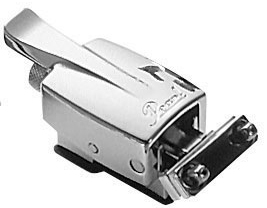
My next Pearl was the Chad Smith signature model. I was pleasantly surprised by the wide tuning range and sensitivity of this instrument, which is among the low end snare drums offered by Pearl. Even with stock heads and snares it was more than adequate for jazz, blues and classic rock. One feature I especially like is the Pearl SR-015 strainer, which is a Gladstone style throwoff shown below:

Overall it is a versatile snare drum that is often overlooked because of its low price and the fact that it has a steel shell. The only reason I sold mine is because I was on a vintage snare drum quest and I had other metal shell snare drums that rendered the Chad Smith model redundant.

I next acquired a Pearl 6.5x14 brass Sensitone Special NAMM edition:
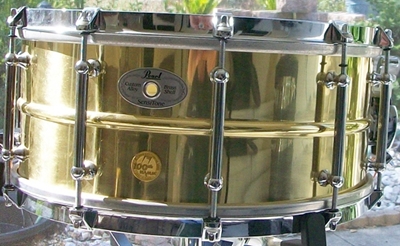

This snare drum started my love affair with Pearl Sensitone snare drums. My favorite feature is the single flange hoops with heavy duty hoop clips that give this snare drum an open sound. It works extremely well with brushes, and has a wide dynamic range from soft to loud. It also is one of the more sensitive snare drums I've owned.

I feel that you cannot go wrong with any of the many Sensitone models, but I especially like the 6.5x14 Sensitone Elite Beaded Phosphor Bronze Snare (easily the equal of my Special NAMM edition Sensitone), and the 5x14 Pearl Sensitone Elite Beaded Aluminum Snare, which sounds like a vintage Ludwig Acrolite. The 5x14 size of the aluminum model is more versatile than a deeper snare drum, and the shell gives it a wood-like sound, making it a good compromise between a metal and a wood snare drum.

My Special NAMM edition snare drum will always have a place in my snare drum arsenal, as will my Pearl 5.5x14 50th Anniversary snare drum.
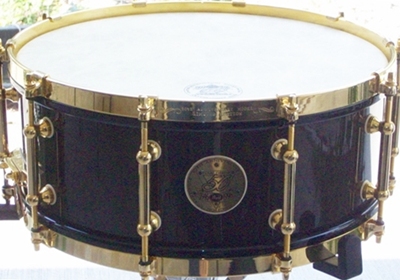

I love everything about the 50th Anniversary - single flange hoops, steambent maple shell, and even the special edition Fiberskyn head. This particular snare drum proved to me that Pearl could make a wood snare drum that has the same mojo as their metal models. This led me to the 6.5x14 Pearl MHX Masters Mahogany Snare Drum, which is - in my opinion - the equal of any wood snare drum Ludwig makes (and Ludwig will always be the benchmark.) This snare drum has a 4-ply mahogany shell and 4-ply maple reinforcement rings, and is perfect for any musical style. I did not like the die cast hoops that it came with, but after throwing a set of triple flange hoops on the snare drum sang.

Bottom line: Pearl knows how to make snare drums. In my opinion you cannot go wrong with even their low end models, and their high end models are simply amazing. More importantly, every Pearl snare drum I have owned or played worked beautifully out of the box, which is refreshing considering that the first thing I do with a new snare drum is change the heads and snare wires.

Tuesday, April 6, 2010

Five Star Tips

Need some quick advice on tuning, head selection and a plethora of other topics? This collection of short tips is worth checking out.

Friday, April 2, 2010

Properties of Drum Shells and Bearing Edges

In My Approach to Tuning I briefly discussed the importance of bearing edges and shell material. Eric J. Macaulay's paper, Properties of Drum Shells and Bearing Edges adds a significant amount of information to what I touched upon. In addition, the following articles will add more information to aspects of drum construction that affect the sound of a drum:It all comes down to knowing your instrument. I hope the foregoing helps you to understand aspects of drums that too many drummers ignore.

Thursday, April 1, 2010

Wood or Metal Shells? Here's a Compromise

Many drummers have marked preferences for either metal or wood snare drums, and usually stick to their preferences. Not all drummers, of course, because some drummers will select the right instrument for a specific venue or recording session.

I have a personal theory that preferences are often based on the first snare drum a drummer owns. I prefer wood snare drums, and it's probably because my first drum kit in 1964 came with a wood snare drum. The sonic characteristics of our first snare drums tend to imprint us. Wood snare drums are typically warmer than metal, and have tonal qualities that a metal snare drum cannot deliver. Metal, and especially brass, tends to project more, sound brighter, and - when tuned a certain way - has a "honk" that appeals to many drummers.

Certain snare drums, however, have sonic characteristics of both shell types. The Slingerland copper snare drum I discussed in my last post has wood-like sound qualities. Part of the reason is the copper shell, which gives the drum a softer, almost diffused tone.

There is another class of metal shell that possesses the same qualities: hammered metal. I own two, both made from different types of metal, that would fool many in a blindfold test.

The first is my Ludwig 6.5x14 hammered bronze snare drum:


That is the snare drum that induced me to try metal sell snare drums. The hammering dried out the sound sufficiently to give it a distinct wood tone, and the bronze shell contributed to the tone and sensitivity, making it ideal for brushwork. In fact, it is an extraordinarily sensitive drum considering the shell depth. At first I wasn't sure if it was the bronze shell or the hammering that imparted the sonic qualities I found so desirable. I became convinced after I acquired another hammered shell snare drum - a 5x14 hammered Supraphonic:

Not only is the depth more shallow, but the shell is made from Ludalloy (Ludwig's term for chrome plated aluminum.)

Like the bronze shell model, the hammered Ludalloy model is drier than a standard Ludalloy Supraphonic, and has wood-line tone.

To truly ensure that it's the hammering and not the shell material I tested out a Ludwig 5x14 hammered brass Black Beauty. The test was apples-to-apples against the Ludalloy hammered Supraphonic in that the depths were identical. Result: same dry, woody quality as the other hammered shell snare drums. It was actually a surprise because brass is a much brighter sounding metal when used for drum shells.

The conclusion is if you want a snare drum that shares some of the most important characteristics of both wood and metal, then a hammered shell snare drum (or one with a copper shell) may be the best solution. I've used Ludwig snare drums as examples because I own and have first hand experience with them. Most major drum companies offer hammered shell snare drums, mainly made from brass, including Gretsch, Pacific, Peace and Worldmax. They are worth a look if you are seeking a versatile snare drum that has tone with a bit more projection.